


Repair Heating System: When DIY Isn't Enough
Repair Heating System: When DIY Isn't Enough
Read more



Free, no-obligation quote
Tell us what's going on with your heating, cooling or water heater and we'll follow up to book a visit.
Prefer to talk? Call us directly(705) 706-7622Thanks, we've got your request.
We'll be in touch shortly. Need us sooner? Call (705) 706-7622.
Sorry, that didn't send. Please try again or call (705) 706-7622.
It's tempting to adopt an "out of sight, out of mind" attitude with your tankless water heater. But ignoring it is a recipe for lukewarm showers, surprise energy bill spikes, and a much shorter lifespan for your unit. Think of preventative care not as a cost, but as a smart investment in your home's comfort and a way to sidestep those dreaded emergency repair bills.
A little regular service goes a long way in keeping your system running at peak efficiency and safety for years to come. That's why having a trusted professional on your side is key to protecting your investment.
It’s easy to forget about servicing your tankless water heater, but the problems that arise tend to build up silently. Unlike an old tank-style heater that might spring a dramatic leak, a tankless unit usually dies a slow death of declining performance. And the primary culprit? Mineral scale.
If you live in an area with hard water, minerals like calcium and magnesium are constantly running through the delicate heat exchanger. Over time, they stick to the internal components, creating a hard, crusty layer of scale.
This scale isn't just some harmless residue; it sets off a chain reaction that hits both your comfort and your wallet. It's a bit like plaque in an artery—the water struggles to get through, forcing the entire system to work overtime.
Here's how that plays out:
Weak Water Flow: The most obvious sign is a drop in water pressure as the pipes inside the unit get narrower.
Wasted Energy: Scale acts as an insulator, so the burner has to fire longer and harder just to get the water to the right temperature. You'll see this reflected in your gas or hydro bill.
Strained Parts: All that extra effort puts a ton of stress on the heating elements, sensors, and other critical components, causing them to wear out much faster.
We see this all the time. A homeowner in Muskoka couldn't figure out why their showers were getting colder and their hydro bill was climbing. They'd skipped maintenance for two years. When our technicians opened up the unit, the heat exchanger was so clogged with scale it was running at only 60% efficiency. We fixed it with a professional descaling, but that stressful situation could have been completely avoided with simple annual flushing.
Forgetting to service your tankless water heater is like never changing the oil in your car. It’ll run for a while, but you're setting yourself up for a much bigger, more expensive breakdown down the road.
This isn't just anecdotal. Data from the California Association of Plumbing Contractors revealed that 74% of homeowners with tankless units needed at least one service call in the first five years, with scale buildup being a top reason. You can learn more about tankless water heater ownership costs to see why proactive care is so important.
A scheduled service call isn't just about cleaning a few parts; it's about protecting the investment you made and preserving the efficiency you paid for. Let our experts handle the dirty work so you can enjoy reliable hot water without a second thought.
Want to get the most out of your tankless water heater? A little hands-on maintenance can help, but it's crucial to know your limits. While we always recommend professional service for a comprehensive check-up, there are a few tasks you might consider tackling yourself to keep things running smoothly between expert visits.
The single most important routine task is flushing the system to get rid of mineral scale.
Think of it like descaling your coffee maker, but for the appliance that gives your whole home hot water. Doing this once a year prevents that slow, chalky buildup that leads to lukewarm showers and creeping energy bills. It keeps the internal pathways clear so your unit can heat water efficiently without having to work so hard.
This might sound intimidating, and if you're not comfortable with plumbing, it's best to call us. However, if you're a confident DIYer, it's a job that requires a few things from a hardware store. You'll need a small submersible pump, a couple of washing machine hoses, a bucket, and about 8 litres of plain old white vinegar.
Here’s the basic rundown of how it’s done:
First, safety. Shut off the power and the gas supply to the unit. You’ll also need to close the main water valves that feed the heater.
Hook up your hoses. Your unit will have service valves (usually with red and blue handles) made for exactly this. Attach one hose to the cold water service valve and drop the other end into your bucket. Connect the second hose from the hot water service valve to your submersible pump.
Create the cleaning loop. Put the pump inside the bucket and pour in the vinegar. You've just made a closed loop that will circulate the vinegar right through the heater's guts.
Let it run. Open up the service valves and switch on the pump. Let it circulate for a solid 45 to 60 minutes. During this time, the vinegar's gentle acidity works its magic, dissolving the calcium and magnesium buildup inside the heat exchanger.
Rinse it clean. After an hour, turn off the pump and close the service valves. Carefully disconnect your hoses. Now, open the main water valves back up and run a hot water tap somewhere in the house to flush out any leftover vinegar. Keep it running until the water is clear and you can't smell vinegar anymore.
This flushing process is a fundamental part of any effort to service a tankless water heater, but a professional service call goes much deeper to ensure every component is in perfect working order.
This infographic really shows what happens when you skip that annual flush—from temperature problems to higher bills and, eventually, a much shorter lifespan for your heater.
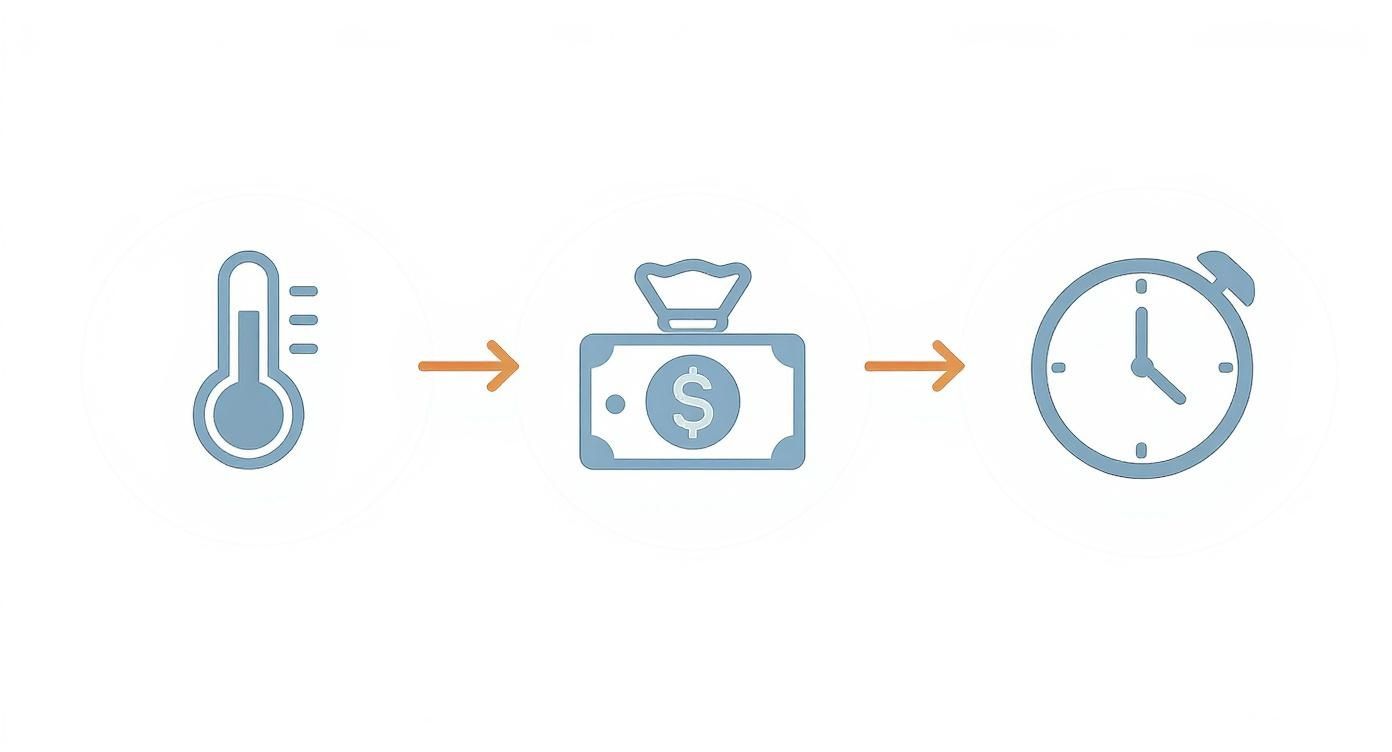
It’s a great visual reminder of how a small, invisible issue like scale buildup can snowball into some very real, and very expensive, problems down the road. An annual professional service call from Bridlewood Mechanical is your best defense.
Deciding what you can handle and when to call us isn't always obvious. This table breaks down the common maintenance tasks to help you figure out what's safe for a DIY approach versus what really needs a certified technician's expertise.
Ultimately, while DIY checks are fantastic for your system's health, nothing replaces a full diagnostic from a trained professional. It's the best way to ensure both safety and peak performance.
Beyond the big flush, a couple of quick visual checks can save you a lot of headaches. They only take a few minutes but can catch common problems with water flow and safety before they start.
Clean the Inlet Water Filter
On the cold water line coming into your heater, there's a small screen filter. Its job is to catch any sediment or gunk from the water supply. If it gets clogged, your water pressure can drop. Just unscrew the cap, pull out the filter, and rinse it under the tap until it’s clean. Then pop it back in.
Don't underestimate this simple step. We've been on service calls where the "low water pressure" mystery was solved in two minutes by cleaning a clogged inlet filter—a fix the homeowner could have easily done for free.
Inspect Exterior Vents
For gas models, those vents on the outside of your house are crucial for safety and proper operation. Get in the habit of glancing at them every so often.
Look for leaves, blowing debris, or animal nests that could be blocking the opening.
Make sure shrubs and plants aren't growing too close and cutting off airflow.
In the winter, always check for ice buildup after a big snowfall or freezing rain.
A blocked vent can cause the unit to shut itself off as a safety measure. In a worst-case scenario, it could lead to dangerous carbon monoxide spilling into your home. By doing these simple checks, you become the first line of defence, but for a guaranteed safe and efficient system, an annual professional check is essential.
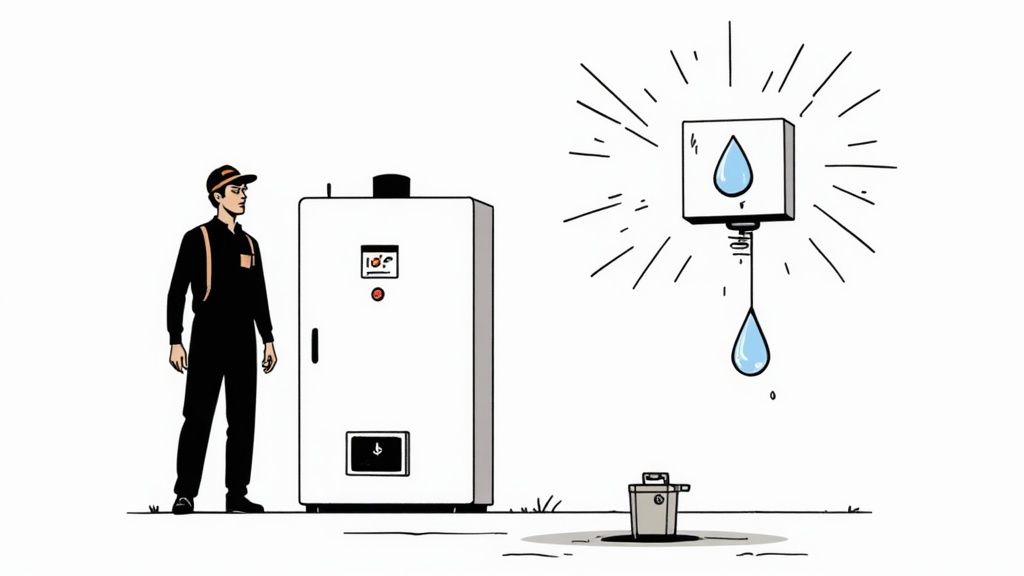
Knowing how to flush your system and clean filters is great, but some issues are your tankless heater's way of sending up a flare, signalling a problem that needs a professional technician—fast.
Ignoring these warnings can turn a simple repair into a costly replacement. The key is knowing what to look and listen for so you can call us before you're left taking cold showers.
That little digital display on your unit? It's your first line of defence. If an error code flashes, don't just power cycle the unit and hope it goes away. That code is a specific diagnostic message, pointing to anything from a sensor failure to a gas ignition problem. It's telling you exactly what's wrong, and our technicians have the tools and training to fix it correctly.
On that note, listen to your unit. A healthy tankless heater is remarkably quiet. If you suddenly hear humming, buzzing, or—worse—a loud banging or rumbling sound, something is wrong. That "kettling" noise is a classic symptom of extreme mineral buildup inside the heat exchanger, which is under immense stress.
A tankless water heater should be practically silent. If you can suddenly hear it working from the next room, it’s a clear sign a component is struggling and needs professional attention right away.
If your hot water pressure suddenly tanks but your cold water is fine, you've got a problem. Sure, it could be a clogged inlet filter, but a major drop often points to a serious blockage deep inside the unit that requires professional equipment to clear.
And this one is non-negotiable: if you see water, make the call. Any leak, big or small, around fittings or from the bottom of the unit is a critical issue. It could be a failed seal or a cracked component. For complex issues like these, our professional HVAC and plumbing services are your safest bet to prevent water damage.
Is your shower playing games with you, going from scalding to icy and back again? That kind of temperature rollercoaster usually points to a problem with the internal flow sensor or the modulating gas valve. These are highly sensitive components, and trying to adjust them without the right training can do far more harm than good.
Finally, the most urgent red flag of all is the smell of gas. If you ever catch that distinct "rotten egg" odour near your unit, shut off the gas supply to the appliance immediately. Evacuate the area and call us for emergency service from a safe distance. This is never a DIY situation. It's also worth noting that newer, high-efficiency models can be more complex. A California study, for example, found that ultra-low NOx tankless heaters had a 30% higher rate of service calls for specialized burner and emission control checks.
When you have a certified Bridlewood Mechanical technician come out to service your tankless water heater, you're getting more than a quick flush. A proper service call is a deep dive into the health of your entire system, designed to catch small issues before they turn into big, expensive headaches.
The first thing a pro will do is a thorough visual inspection. We’re talking about a top-to-bottom walkaround, looking for subtle signs of trouble like weeping from a connection, early-stage corrosion on the casing, or the dreaded pinhole leaks that can cause major water damage.
From there, the real work begins. Our comprehensive service always covers:
Burner Assembly: Cleaning and inspecting the burner to guarantee a clean, reliable ignition every time.
Gas Pressure: Measuring and adjusting the pressure to match the manufacturer's exact specifications for peak efficiency and safety.
Safety Sensors: Testing the flame detection and high-limit temperature sensors to ensure they'll shut the unit down if something goes wrong.
Electrical Connections: Checking and tightening every connection to prevent intermittent shutdowns or electrical arcing.
Venting Pathways: Making sure both the intake and exhaust vents are completely clear of obstructions for safe operation.
This isn't just a checklist; it's about precision. For example, our technicians use specialized gauges to test the gas pressure, making sure it’s within the precise PSI range required. A slight deviation can impact efficiency and even the lifespan of your unit.
Similarly, loose electrical wiring is a common culprit for those frustrating, random shutdowns. We physically tighten and test each terminal to ensure everything is rock-solid.
Now for the heart of the system: the heat exchanger. This is where the magic happens, but it's also where mineral scale loves to build up. A full, professional descaling is the centerpiece of our service.
Your technician will hook up a pump and circulate a professional-grade, gentle descaling solution through the heat exchanger. This process dissolves the limescale and mineral deposits that choke water flow and force your unit to work harder. It's not uncommon to restore up to 20% of the unit's lost efficiency with this step alone.
Next up is the venting. We check the termination points outside your home for any blockages—think leaves, bird nests, or even snow buildup. A blocked vent is a serious safety hazard, so ensuring clear airflow is absolutely critical.
Interestingly, there's been a huge uptick in qualified technicians specializing in tankless systems. A report mentioned on Angi’s site highlighted a significant increase in licensed contractors offering these services since 2020, which is great news for homeowners.
“A well-maintained heat exchanger can mean the difference between consistent hot water and unpredictable temperature swings.” – Certified Plumbing Expert
We also measure water flow rates with professional flow meters. This simple test confirms the unit is firing up at the correct demand and serves as a quick check for any hidden leaks in the system.
Before packing up, the technician will run your system through a full operational cycle to simulate a real day of use. We monitor the temperature rise and make sure the output is stable and consistent.
You'll then get a detailed service report that clearly outlines every task performed, the readings we took, and any recommendations for the future. You can explore some of these options over on our water heater installation services page.
We believe in transparent pricing, so you’ll never see hidden fees.
This isn’t just about fixing what’s broken; it’s about giving you the confidence and peace of mind that your tankless system is running safely and at its absolute best.
At the end of the visit, your technician will walk you through the service report, explaining everything in plain language. This is your chance to ask questions and get personalized advice on how to keep your system in top shape.
You’ll leave the appointment with a clear, itemized breakdown of the costs. Any new parts will be listed with their part numbers and installation dates, creating a meticulous service history for your records. It's all about ensuring you're covered, informed, and ready to enjoy reliable hot water every single day.
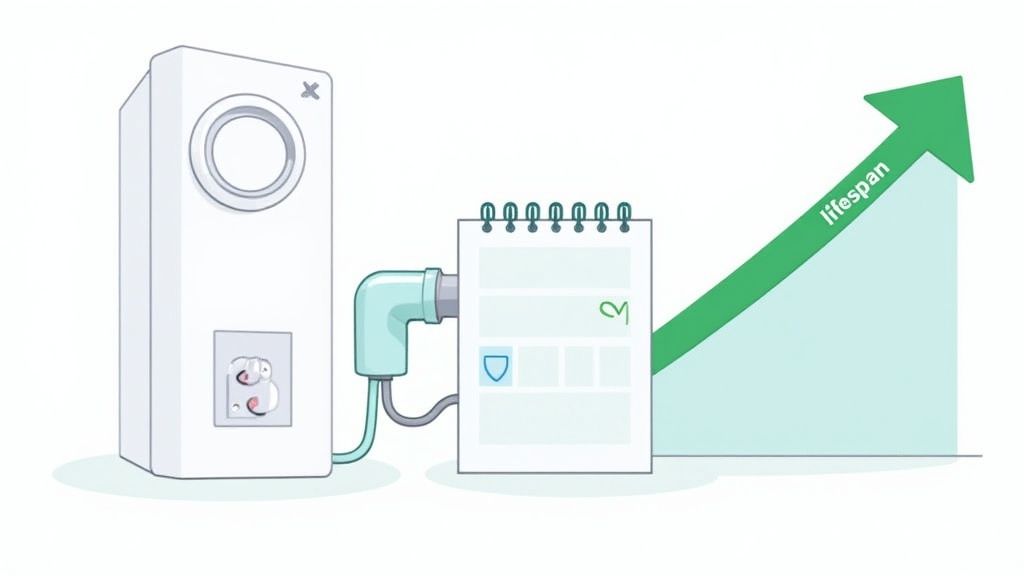
Annual tune-ups by a qualified technician set the stage for a trouble-free tankless heater. Yet, the small habits you adopt day to day really determine how smoothly—and how long—it will run.
Hard water is the hidden culprit in most early failures. High concentrations of calcium and magnesium accumulate inside the heat exchanger, causing it to work overtime.
Installing a whole-home water softener is the single best long-term strategy to protect your tankless water heater. It acts like a bodyguard, filtering out damaging minerals before they ever reach your unit.
A quality softener installed by our team not only protects your water heater but also shields every appliance hooked up to your plumbing, from the coffee maker to the clothes washer.
A few tweaks to your routine can ease the daily grind on your heater, stretching its useful life without costing a dime.
Set The Right Temperature
Most units ship at 55–60 °C, hotter than you really need. Dial it back to 49 °C (120 °F)—comfortable for showers and dishwashing, and gentler on internal parts.
Space Out Heavy Usage
Running your dishwasher, doing laundry and taking a shower back-to-back pushes the system into overdrive. Spread these tasks across hours for smoother operation.
These simple steps, paired with our professional servicing, pave the way to the 20+ year lifespan manufacturers promise. More homeowners in California are making the switch: roughly 35% of all new residential construction now features tankless water heaters. For a deeper look at this rising trend, you can discover more insights about the tankless water heater market.
By blending expert care with these everyday practices, you’ll keep your system performing at its peak for years to come.
It’s perfectly normal to ask how often a tankless water heater needs attention. While annual professional maintenance is our official recommendation, your situation might call for more frequent check-ins.
If you live in a hard water area, scaling can creep in fast. In those cases, descaling every six months makes sense. Our technicians can assess your water quality and recommend the perfect schedule for you.
Regular Filter Rinse: A quick wash prevents grit from building up and keeps water flowing freely.
Vent Inspection: Clear out leaves, bird nests or dust to ensure proper airflow.
Annual Descale: Let our pros handle this with professional-grade solutions for a deeper, safer clean.
Keep an eye on your heater’s performance. Strange noises, slower flow or higher energy bills are signs you should call us to adjust your service schedule. A Muskoka family learned this the hard way—skipping a flush for 18 months cost them 30% efficiency.
A routine check-up today prevents emergency fixes tomorrow. Let us handle it for you.
Investing in professional maintenance typically runs between $180 and $300. That investment often prevents much bigger bills—emergency repairs can easily top $700.
Our standard service call includes:
Burner Inspection: Clean components, test flame quality and confirm safe combustion.
Sensor Testing: Make sure temperature and flow sensors are calibrated to avoid unexpected shutdowns.
Vent Safety Check: Verify both intake and exhaust paths are free from blockages.
Studies in California show that regular professional tune-ups slash breakdown risk by 45%. Bridlewood Mechanical provides transparent, upfront pricing and helps you navigate any available rebates to make service even more affordable.
If you choose to descale yourself between professional visits, never experiment with fancy vinegars or harsh chemicals. Plain white vinegar is the only safe DIY choice. Other acids or sugars can damage sensors and internal components.
Apple Cider Vinegar: Acids and sediments leave behind residue.
Balsamic Vinegar: Sugars can caramelize inside the heat exchanger, leading to clogs.
For a DIY descale, circulate 8 litres of white vinegar through the unit for about an hour, then flush with clean water. For a truly deep clean, it's always best to have a professional do it.
“White vinegar clears scale without harming internal parts.” – HVAC Expert
Have more questions or ready to schedule your service? Our team is here to help. Get in touch with us through our contact page and ensure your hot water is always reliable.
Contact Bridlewood Mechanical at https://bridlewoodmechanical.ca for reliable service tankless water heater support. Schedule now.









Free, no-obligation quote
Tell us what's going on with your heating, cooling or water heater and we'll follow up to book a visit.
Prefer to talk? Call us directly(705) 706-7622Thanks, we've got your request.
We'll be in touch shortly. Need us sooner? Call (705) 706-7622.
Sorry, that didn't send. Please try again or call (705) 706-7622.

Repair Heating System: When DIY Isn't Enough

How Long Do Heat Pumps Last? A Homeowner's Guide to Longevity
Discover our dedication to delivering tailored, high-quality HVAC solutions.
Copyright © Bridlewood Mechanical 2025 | Designed By Vodata Digital


