


Service Tankless Water Heater: The Pro's Maintenance Guide
Service Tankless Water Heater: The Pro's Maintenance Guide
Read more



Free, no-obligation quote
Tell us what's going on with your heating, cooling or water heater and we'll follow up to book a visit.
Prefer to talk? Call us directly(705) 706-7622Thanks, we've got your request.
We'll be in touch shortly. Need us sooner? Call (705) 706-7622.
Sorry, that didn't send. Please try again or call (705) 706-7622.
Thinking about installing a heat pump in Ontario? The first question on everyone's mind is, "What's this going to cost me?" You need a clear, straightforward answer, and that's exactly what we're here to provide.
On average, a full heat pump installation in Ontario from a trusted professional will typically land somewhere between $6,000 and $15,000. This isn't just for the unit itself; it's an all-in price that covers expert labour and all necessary materials. Of course, this number can climb higher for high-efficiency, cold-climate models designed for our winters, sometimes pushing past $20,000.
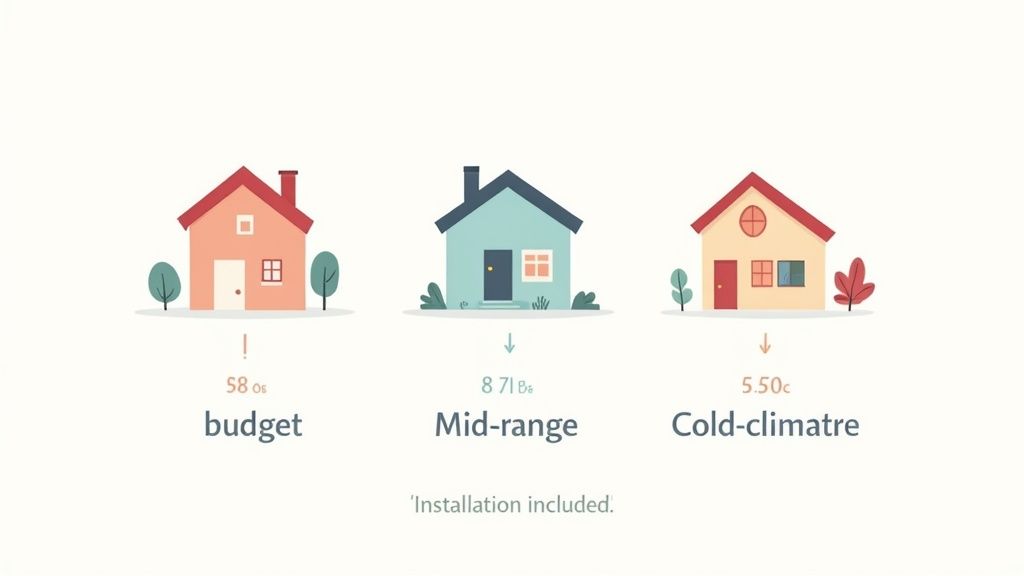
When you receive a professional quote, you're looking at the total investment required to get a high-performance system running perfectly in your home. This price bundles the physical heat pump with the expertise of certified technicians and all the copper lines, wiring, and materials needed for a safe, reliable setup. It’s like buying a car—the final price includes the engine, the tires, and the assembly, not just the steel frame.
The final figure on your estimate comes down to a few key variables. The size of your house, whether you're connecting to existing ducts or going with ductless "heads," and the state of your home's electrical panel all play a big part. This is why you see such a wide price range—a professional quote covers everything from a straightforward installation to a complex, premium system designed to handle our toughest Ontario winters.
That broad price tag isn't meant to be confusing; it reflects how customized a heat pump solution is. It ensures you can get a system that hits the sweet spot between your budget and your home's unique comfort needs.
In 2025, for example, a standard air-source heat pump installation in Ontario sits in that $6,000 to $15,000 range. What pushes a job to the lower or higher end of that scale?
High-performance, cold-climate models built to keep you warm even when the temperature plummets can easily exceed $20,000. The best way to find out where your home fits is to have an expert take a look. You can always get more details on heat pump pricing from HVAC professionals in Toronto to get a precise, no-obligation quote.
Think of a heat pump as a long-term investment in your home's comfort and energy future, not just another appliance. The initial cost is just one piece of the puzzle. When our team helps you factor in the energy savings and available government rebates, a big chunk of that upfront expense often comes right back to you.
To give you a clearer picture, here’s a quick-reference table breaking down the typical all-in costs for different types of heat pumps we commonly install in Ontario homes.
This table provides a snapshot of what you can generally expect to pay for a complete, professional installation based on the system type and the size of your home.
Remember, these are estimates. The only way to know the true cost for your specific property is to get a detailed, in-home assessment and quote from a qualified contractor like Bridlewood Mechanical.
Every home in Ontario is unique, which means every heat pump quote will be, too. To get past the broad averages, you need to understand the specific factors that truly shape your final price. When you understand these key elements, you can read any estimate with confidence and know exactly what questions to ask your installation partner.
Think of it like building a custom home. The final cost isn't just about the lumber; it's the foundation, the wiring, the windows, and all the specific finishes you choose. In the same way, the total heat pump installation cost in Ontario is a sum of several critical parts, not just the price tag on the unit itself.
The single biggest driver of your cost is the type of heat pump you choose. A central ducted system, which works with your home's existing furnace ductwork, is a totally different beast from a ductless mini-split system. Ductless units use individual wall-mounted heads to heat and cool specific rooms, making them a fantastic solution for homes without ductwork, but their cost structure changes with each zone you add. You can learn more about how they work in our guide to ductless heating and cooling solutions.
Just as important is the system’s size, which is measured in British Thermal Units (BTUs). A sprawling 3,000-square-foot home in Muskoka needs a much more powerful (and pricier) unit than a cozy 1,200-square-foot bungalow in Gravenhurst. This isn't guesswork; our technicians perform a detailed analysis to ensure your system is perfectly sized. An undersized unit will run constantly and fail on the coldest days, while an oversized one will short-cycle, wasting energy and wearing out prematurely.
When you see acronyms like SEER2 (Seasonal Energy Efficiency Ratio 2) and HSPF2 (Heating Seasonal Performance Factor 2), you're looking at the unit's fuel economy. The higher these numbers, the less electricity the heat pump uses to keep your home comfortable.
Think of a higher-efficiency heat pump not as an expense, but as a direct investment in smaller hydro bills for years to come. While these systems cost more upfront, the energy savings can deliver a significant return over the unit's lifespan, especially with Ontario's electricity rates.
Plus, choosing a higher-efficiency model is often a requirement for unlocking the most valuable government rebates. Our team specializes in matching you with rebate-eligible systems that often cover the initial price difference, making the more efficient option the smartest financial move.
What often catches homeowners by surprise are the necessary upgrades needed to support the new system. These aren't really "hidden" costs—they're a normal part of a professional installation and precisely why a thorough, in-person quote from an expert team is non-negotiable.
Here are a few common additional jobs that might be on your quote:
Based on 2025 data, the all-in installed cost for a heat pump in Ontario can range from $6,920 to $16,500, with high-performance, whole-home cold-climate systems often topping $21,000. This wide range doesn't just reflect the unit itself, but all the potential home upgrades needed for a safe and efficient installation. A transparent quote from a contractor like Bridlewood Mechanical will always itemize these costs clearly, so you know exactly what you're paying for. You can see more about general HVAC installation cost trends in Canada to get a broader perspective.
Seeing the initial quote for a new heat pump can cause a bit of sticker shock. It's a big number. But it's crucial to remember that this first price is almost never what you'll actually pay out-of-pocket.
Generous government incentives are in place to drastically cut the heat pump installation cost in Ontario. These programs can transform what looks like a major expense into a smart, affordable investment for your home.
Of course, trying to figure out these rebates on your own can feel like a full-time job. The eligibility rules, the paperwork, the deadlines—it’s enough to make anyone’s head spin. That’s where having an experienced partner like Bridlewood Mechanical makes all the difference. We manage the entire rebate process for you, ensuring you get every dollar you’re entitled to.
Here in Ontario, we’re lucky to have several powerful rebate programs available. The trick is knowing which ones apply to your situation and how to stack them for the biggest possible savings.
The most well-known program is the Canada Greener Homes Initiative. This is the big federal program offering grants for a whole range of energy-efficient home upgrades, and heat pumps are front and centre. To qualify, the system you choose has to meet specific efficiency standards, which just means you’re guaranteed to get a high-performance unit that we can help you select.
On top of that, programs like the Enbridge Home Efficiency Rebate Plus can often be combined with the federal grants. This lets you access even more funding, potentially slashing thousands off the final cost. Some municipalities even have their own local incentives, adding yet another layer of savings.
The secret to maximizing your return is understanding that these programs aren't just about getting a discount. They are designed to encourage the adoption of high-efficiency equipment that will lower your energy bills for years, creating a win-win for your wallet and the environment. Our team ensures your new system qualifies for the maximum rebate available.
The journey for these rebates begins with a mandatory pre-retrofit energy audit. A certified energy advisor assesses your home's current energy use and gives you a report. This is a critical first step—it officially gets you into the system and confirms which upgrades are eligible. After we complete your installation, a post-retrofit audit is performed to verify the new system’s performance and finalize your grant application.
This infographic gives you a great visual on how your home's current setup—specifically whether you have ductwork or not—influences the type of system you'll need and what it might cost before any rebates are applied.
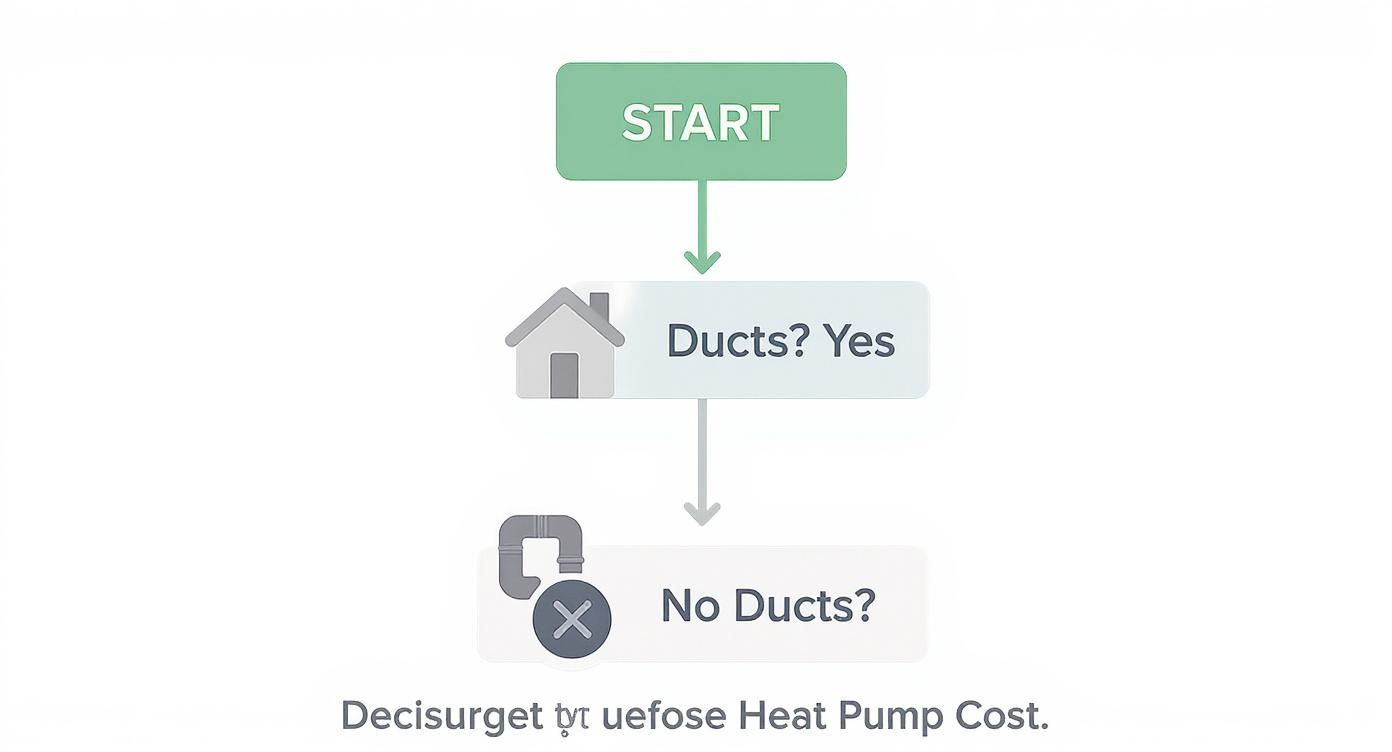
As you can see, the path often starts with a simple question: ducts or no ducts? That one factor plays a huge role in determining the final installation cost.
Let's be honest: the paperwork and technical requirements are the most intimidating part of the whole rebate process. This is where getting professional help is a game-changer.
At Bridlewood Mechanical, we don’t just install heat pumps; we manage the rebate process right alongside you. We live and breathe this stuff, so we know the eligibility criteria for all the major programs inside and out. We make sure the equipment we recommend and install qualifies, help you schedule the energy audits, and handle the submission of all the necessary documents.
This hands-on approach takes all the stress and confusion off your plate. You won't have to worry about missing out on thousands of dollars because of a missed deadline or an incorrectly filled-out form.
And these programs are incredibly popular for a reason. As of September 2025, Ontario homeowners have already installed roughly 103,520 heat pumps with government support through initiatives like the Canada Greener Homes program, leading the entire country in this energy transition. You can discover more insights about Canada's Greener Homes Initiative progress to see just how many people are taking advantage of these savings. Our goal is to make sure you're one of them.
https://www.youtube.com/embed/G5uSgVZ3ums
When you're looking at a new heat pump, it’s easy to get stuck on the initial price tag. But that's only half the story. A new heat pump isn't just another appliance; it's a financial tool that starts paying you back from day one. The real conversation isn't about cost, but about long-term value.
A modern system can slash your monthly utility bills compared to that old furnace and air conditioner combo. That shift in your home's energy use means the upfront heat pump installation cost in Ontario isn't just a purchase—it's an investment with a real, measurable return. Those savings pile up month after month, eventually covering the entire cost and then continuing to put money back in your pocket for years.
So, how long does it take to break even? We call this the "payback period"—the time it takes for your energy savings to completely cover your net installation cost (that's the final price after all rebates are applied). It’s a straightforward but powerful way to see the financial upside.
Let's walk through a realistic example for a home here in Ontario.
Imagine you're a homeowner in Muskoka, currently running an older, mid-efficiency propane furnace and a separate central AC unit. Your annual heating and cooling bills are hitting you for about $4,200. You decide it's time for an upgrade and call Bridlewood Mechanical for a quote on a new, high-efficiency cold-climate heat pump.
Here's how the numbers break down:
Once the new system is up and running, your annual heating and cooling costs plummet to just $2,100. That’s an annual saving of $2,100.
To figure out the payback period, just divide your net cost by your annual savings: $9,500 ÷ $2,100 per year = roughly 4.5 years. In just four and a half years, the heat pump has officially paid for itself.
From that point on, for the remaining 15-20 years of its lifespan, that $2,100 you save every year is pure profit. It's a powerful financial argument for making the switch.
The financial perks don't stop with your energy bills. A high-efficiency heat pump is a major selling point that can actually boost your home's market value. Today's buyers are savvy about energy efficiency and environmental impact.
A home with a modern heat pump stands out. It signals lower running costs and a forward-thinking investment, making your property far more attractive and competitive on the market. Of course, getting the most out of your system is crucial, and our expert team can help with smart thermostat installations to make sure your heat pump runs at absolute peak efficiency.
Ultimately, this upgrade makes your home more comfortable today while building real, long-term equity. It delivers value from the moment we install it to the day you decide to sell.

Let's be blunt: a top-of-the-line heat pump is only as good as the hands that install it. A rushed or improper installation can sabotage your entire investment, leading to poor efficiency, frequent breakdowns, and none of the savings you were promised.
Choosing your HVAC contractor is easily the most critical decision you'll make. A great installation isn't just about connecting pipes and wires; it's about safeguarding your comfort for the next two decades. The right team ensures your system is perfectly sized, safely installed, and optimized to perform flawlessly. They become your trusted partner, guiding you through everything from complex load calculations to navigating the maze of rebate paperwork.
The challenge is telling the real pros from the rest. With a few key questions, you can quickly assess their expertise and find a team that truly stands behind their work.
Before you even think about signing a contract, you need to vet your potential installer. Their answers to these questions will tell you everything you need to know about their experience, professionalism, and whether they have your best interests at heart. A contractor who knows their stuff will welcome these questions.
Here’s what you absolutely need to ask:
These questions help you look beyond the sales pitch to gauge a contractor's technical skill and genuine commitment to service. You can learn more about our own meticulous process by checking out our guide to professional heat pump installation services.
Even after digging into the costs, rebates, and long-term value, it's totally normal to have a few more questions. A heat pump is a big upgrade for your home, and you should feel 100% confident before moving forward. So, let's get you some direct, no-nonsense answers to the things we hear most often from homeowners just like you.
We'll clear up any lingering doubts about how these systems really handle our tough winters and what you can expect when it comes to noise and upkeep. Think of this as the final piece of the puzzle, giving you the clarity you need to make the right choice.
This is the number one question on everyone's mind, especially if you've lived through a true Canadian winter. The short answer is yes, for most of Ontario, having a backup heating source is absolutely the best way to guarantee total peace of mind.
Modern cold-climate heat pumps are incredible pieces of engineering. They can pull heat from the air even when the temperature dips well below freezing, and for most of the year, they'll handle your home's heating needs all on their own.
But when we get into those deep-winter cold snaps—when the thermometer plunges to -15°C or even -25°C—their efficiency starts to drop. At that point, letting a backup system take over is both the most comfortable and the most cost-effective strategy. This setup is what we call a dual-fuel system.
A dual-fuel system is the marriage of an electric heat pump and a high-efficiency natural gas or propane furnace. A smart thermostat, which we can install, is the brain of the operation, automatically switching to whichever fuel source is cheapest to run based on the outdoor temperature. You stay warm without ever overpaying for electricity in extreme cold.
It’s truly the best of both worlds: amazing efficiency for the vast majority of the year, backed by the rock-solid, powerful heat of a furnace for those few truly brutal days.
This is the million-dollar question, and the answer really depends on what kind of heating system you're using right now. While every home is different, it’s not uncommon for homeowners in Ontario to see their total annual energy bills for heating and cooling drop by anywhere from 30% to 60%.
The biggest savings always come from replacing older, less efficient, and more expensive fuel sources.
Your actual savings will hinge on things like your local hydro rates, your home's insulation, and your thermostat habits. The only way to get a really accurate projection is with a professional energy audit—which is the first step required for most government rebate programs anyway. Our team will guide you through this process.
I hear this concern a lot, and it usually comes from bad memories of old, rattling air conditioners. The great news is that technology has come a very long way. Modern heat pumps are engineered to be quiet and are often significantly less noisy than the traditional AC units they're replacing.
The outdoor unit produces a low, steady hum—much like a modern refrigerator. Most units are rated between 40 and 60 decibels. For context, a quiet conversation is around 60 decibels. It's a background sound you'll probably stop noticing after the first day.
The indoor units, whether a central air handler or a ductless head, are designed to be whisper-quiet. Manufacturers focus on noise reduction with features like variable-speed fans and insulated compressor compartments.
Plus, a quality installation makes a huge difference. A professional contractor will ensure that:
At Bridlewood Mechanical, we're meticulous about planning where the unit goes. Our goal is to make sure its operation is so unobtrusive that you forget it's even there.
A heat pump needs the same kind of regular TLC that a central air conditioner does. Preventative maintenance is the single best thing you can do to protect your investment, keep it running at peak efficiency, and ensure it lasts for a long, long time.
You can break the tasks down into two simple categories: what you can do yourself and what's best left to a pro.
DIY Homeowner Tasks:
Annual Professional Tune-Up:Once a year, it's wise to have a qualified HVAC technician come in and give the system a comprehensive service. This tune-up is all about catching small issues before they snowball into big, expensive problems. A typical service includes:
This simple annual check-in is the key to unlocking the reliability and savings your heat pump was built for.
Ready to see how a modern heat pump could make your home more comfortable while lowering your energy bills? The team at Bridlewood Mechanical is here to give you a transparent, no-obligation quote and walk you through every step, from picking the right system to getting the most from available rebates. Contact us today to schedule your free in-home consultation.









Free, no-obligation quote
Tell us what's going on with your heating, cooling or water heater and we'll follow up to book a visit.
Prefer to talk? Call us directly(705) 706-7622Thanks, we've got your request.
We'll be in touch shortly. Need us sooner? Call (705) 706-7622.
Sorry, that didn't send. Please try again or call (705) 706-7622.
Service Tankless Water Heater: The Pro's Maintenance Guide
Repair Heating System: When DIY Isn't Enough
Discover our dedication to delivering tailored, high-quality HVAC solutions.
Copyright © Bridlewood Mechanical 2025 | Designed By Vodata Digital


